
Before most people try EMDR, they ask the same question:
"Wait... how is moving my eyes back and forth supposed to help me process trauma?"

Fair question. On the surface, it sounds a little strange. If someone had pitched this idea at a dinner party without decades of research behind it, you'd probably raise an eyebrow.
But there's actually a fascinating explanation.
EMDR (Eye Movement Desensitization and Reprocessing) is based on the Adaptive Information Processing (AIP) model, which proposes that our brains are naturally wired to heal from difficult experiences. Most of the time, they do this remarkably well. But when something is overwhelmingly distressing or traumatic, the brain can essentially hit the "pause" button. Instead of fully processing the experience, the memory gets stored in a raw, emotionally charged form.
That's where bilateral stimulation (BLS) comes in.
Despite EMDR's name, eye movements are only one way to create bilateral stimulation. During therapy, you might:
Follow your therapist's fingers with your eyes.
Follow a moving dot on a screen
Alternate tapping your hands on your knees or arms.
Hold small handheld buzzers that gently pulse left, right, left, right.
Listen to alternating tones through headphones.
The important part isn't how you do it—it's the rhythmic back-and-forth stimulation.
So why does this help?
Researchers believe bilateral stimulation works in several ways.
It occupies your brain's working memory.
Think of working memory as your brain's mental workspace. It only has so much room.

When you're recalling a painful memory and paying attention to the left-right stimulation at the same time, your working memory has to split its attention. Because it can't fully devote itself to the traumatic memory, the memory often becomes less vivid and less emotionally overwhelming.
It's a bit like trying to watch an intense movie while also solving a Sudoku puzzle. You can still do both—but the movie doesn't pull you in quite as completely.
It encourages both sides of the brain to work together.
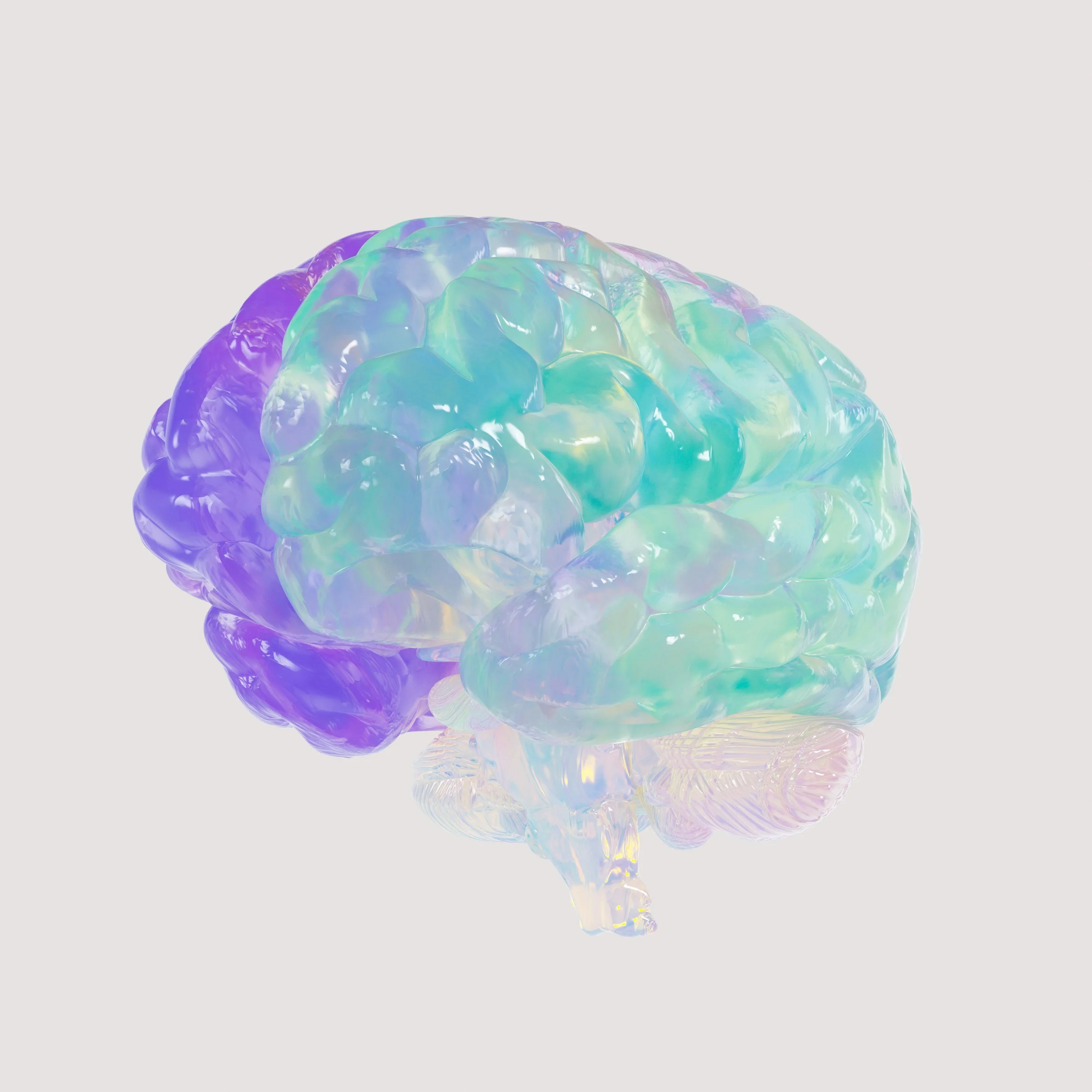
Traumatic memories often feel fragmented. You may remember the fear, the images, or the physical sensations without being able to make sense of what happened.
Bilateral stimulation appears to increase communication between the brain's two hemispheres. While the popular idea that the left brain is "logical" and the right brain is "emotional" is an oversimplification, these networks do contribute differently to how we process information. Better integration can help the brain connect emotions, thoughts, body sensations, and memories into a more complete and coherent story.
In other words, the memory begins to feel like something that happened, rather than something that's still happening.
It may resemble what happens during REM sleep.

Another leading theory is that bilateral stimulation mimics some of the brain activity that occurs during rapid eye movement (REM) sleep—the stage of sleep when we process emotions and consolidate memories.
While EMDR isn't the same as dreaming, researchers believe it may tap into some of the brain's natural information-processing systems. Rather than avoiding the trauma or staying stuck in it, the brain can finally begin filing it where it belongs: in the past.
What changes after EMDR?
As memories become more fully processed, many people notice:
Painful memories become less vivid.
Emotional reactions become less intense.
They feel calmer and more grounded.
Unhelpful beliefs begin to shift.
They gain a healthier, more balanced perspective on what happened.
One of the things clients often tell me is:
"I still remember everything. It just doesn't feel like it's happening to me anymore."
That's the goal. EMDR doesn't erase memories. It helps the brain store them differently.
There are many effective ways to heal from trauma, and EMDR is just one of them. But if you've spent years feeling like your brain is keeping you stuck in the past, it may be worth considering a treatment that works with your brain's natural healing abilities rather than against them.
Sometimes healing doesn't require forgetting what happened.
Sometimes it just requires helping your brain realize that it survived.
