
Courageous Conversations: Navigating Conflict With Intention
When Conflict Feels Hard, There Is a Better Way
Conflict is a normal part of every relationship. Whether it happens with a partner, family member, friend, or coworker, moments of tension and disagreement are inevitable. What often determines the health of a relationship is not whether conflict exists — but how people move through it together.
Many of us were never taught how to navigate conflict in a healthy way. Instead, we may have learned to avoid difficult conversations altogether, become defensive, shut down emotionally, or escalate quickly when emotions feel overwhelming. Over time, these patterns can create distance, resentment, and disconnection.
Healthy conflict resolution is not about “winning” an argument. It is about creating enough safety, understanding, and clarity to work through difficult moments while staying connected.
At our practice, we often support clients in developing communication tools that promote repair rather than rupture. One framework we frequently return to is an eight-step conflict resolution process grounded in emotional regulation, communication research, and relational health.
The 8-Step Process for Healthy Conflict Resolution
1. Pause & Regulate
Before responding, pause.
Take a few slow breaths and check in with yourself emotionally. Are you feeling angry, hurt, embarrassed, overwhelmed, rejected, or misunderstood?
When emotions become highly activated, it becomes much harder to communicate effectively. Regulating your nervous system first creates space to respond thoughtfully instead of reacting impulsively.
Sometimes the most productive thing you can say is:
“I want to have this conversation well. Can I take a moment first?”
2. Identify the Real Problem
Conflict can quickly expand into “everything that has ever gone wrong.” Instead, focus on one issue at a time.
Try separating:
observable facts
fromassumptions or interpretations
Ask yourself:
“What is actually happening here?”
Clarity helps prevent conversations from becoming flooded with old resentment or unrelated concerns.
3. Listen to Understand
One of the most powerful ways to reduce conflict is helping the other person feel heard.
Listening to understand is different from listening to respond. Instead of preparing your rebuttal while the other person speaks, focus fully on their perspective.
Reflecting back what you heard can help reduce defensiveness:
“What I hear you saying is…”
Feeling understood does not necessarily mean agreement — but it often creates enough emotional safety for productive conversation to continue.
4. Use “I” Statements
How we communicate matters.
Statements that begin with blame often lead to defensiveness:
“You never listen to me.”
Instead, try expressing your internal experience:
“I feel hurt when I’m interrupted because it makes me feel unheard.”
“I” statements encourage vulnerability and honesty without attacking the other person’s character.
A helpful formula can be:
“I feel ___ when ___ because ___. What I need is ___.”
5. Clarify Needs & Concerns
Underneath many conflicts are unmet needs.
Often, both people are wanting similar things:
respect
understanding
reassurance
support
connection
safety
When those deeper needs are named, the conversation can begin shifting away from opposition and toward collaboration.
6. Brainstorm Solutions Together
Healthy problem-solving requires openness and flexibility.
Rather than focusing on who is “right,” ask:
“What could work for both of us?”
The strongest solutions are often created together, not imposed by one person onto another.
7. Agree on a Clear Plan
Once a solution is identified, make it specific.
Vague agreements can lead to future frustration and misunderstanding. Clarify:
what each person will do
what expectations exist
how follow-through will happen
Shared clarity helps rebuild trust.
8. Repair & Reflect
Conflict repair is one of the most important parts of relational health.
This may include:
acknowledging impact
offering a sincere apology
expressing appreciation
discussing what could be done differently next time
Repair does not erase conflict — but it helps relationships recover and grow stronger through difficult moments.
A Few Important Reminders
The goal is not perfection
No one navigates conflict perfectly every time. Healthy communication is a skill that develops through practice, reflection, and repair.
Taking a break is okay
If emotions become overwhelming, it is okay to pause the conversation and return later when both people feel more regulated.
The other person is not the enemy
Even in moments of frustration, try to focus on the issue itself rather than attacking the other person’s character.
Conflict Can Be an Opportunity for Growth
While conflict can feel uncomfortable, it can also become an opportunity for deeper understanding, healthier boundaries, and stronger connection.
Relationships are not strengthened by avoiding difficult conversations. They grow through honesty, accountability, emotional safety, and repair.
“The goal isn’t a conflict-free relationship.
It’s a relationship resilient enough to hold conflict — and grow from it.”
If you find yourself repeatedly stuck in painful communication patterns, therapy can help. Many conflict responses are shaped by past experiences, attachment patterns, and nervous system responses developed long before the current relationship.
With support, it is possible to build new patterns rooted in curiosity, regulation, and connection.
Our therapists support individuals, couples, and families in strengthening communication, navigating conflict, and building healthier relationships.
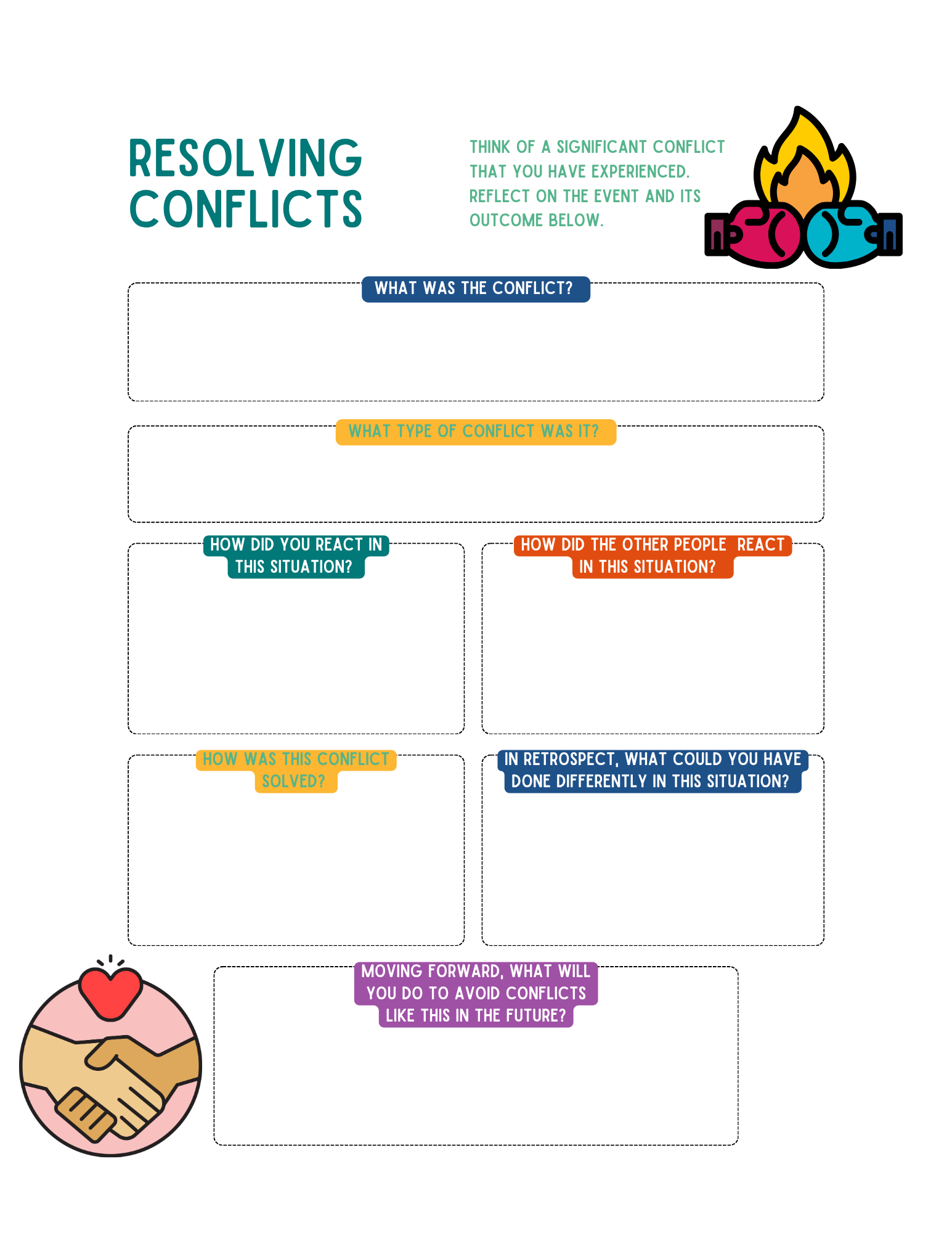
Click the image for a link to download and complete the worksheet.
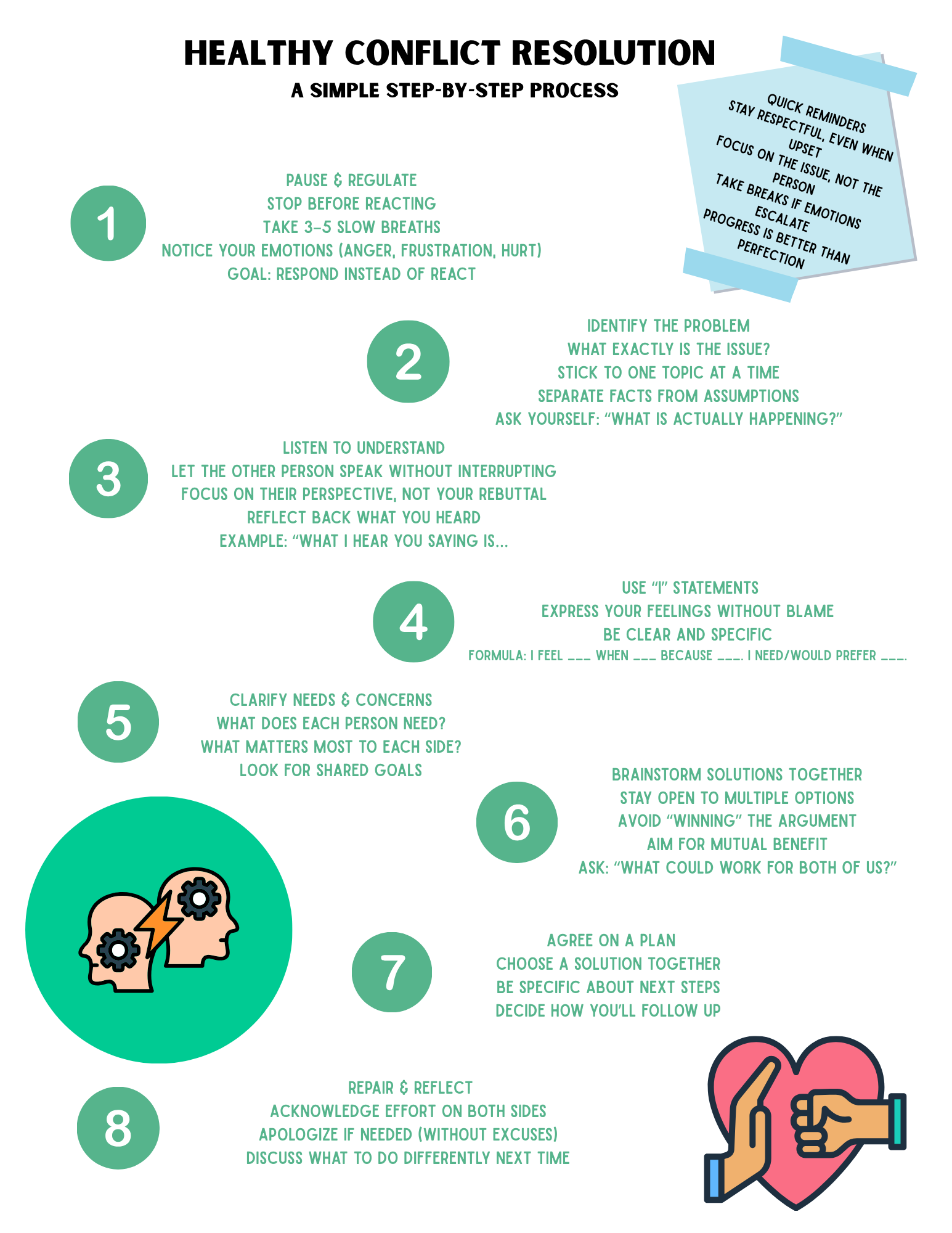
Step-by-step guide on healthy conflict resolution. Click the image to download the document.